
Actor
Mouloud Feraoun
Born 1913-03-08 · Tizi Hibel, Algeria
Mouloud Feraoun (in Kabyle: Mulud At Ceɛban), born March 8, 1913 in Tizi Hibel in Haute Kabylie (Algeria) and died assassinated by the OAS in Algiers on March 15, 1962, is a Algerian speaking writer. His most famous work is the trilogy The Poor Man's Son (1950), The Earth and the Blood (1953) and The Roads That Rise (1957).
Born officially on March 8, 1913 in the village of Tizi Hibel, he belongs to the clan (takheroubt) of Aït-Chabane, Feraoun being the name imposed by officers of Native Affairs responsible for the establishment of a civil status for the Algerian populations after the insurrection of 1871. His parents were poor peasants, who had eight children, only five of whom survived. Mouloud is the third of them, and the first son. Since 1910, the father has had the habit of emigrating periodically to mainland France to provide for the needs of his family. In 1928, he suffered an accident and began living on a disability pension. These family, social and cultural roots are preponderant for Mouloud Feraoun, who titles his first autobiographical novel "Le Fils Du Pauvre" and makes Kabyle culture the main component of his identity.
He attended Tizi Hibel school from the age of seven. In 1928, he was a scholarship holder at the upper primary school of Tizi Ouzou, then, in 1932, he passed the entrance examination for the normal school of teachers of Bouzareah (today École normale supérieure de Bouzareah), near from Algiers. There he met Emmanuel Roblès. A graduate of the normal school, he began his career as a teacher in Taourirt Aden, a small village in Kabylia. In 1935, he was appointed teacher in Tizi Hibel, where he married Dehbia and had seven children.
1 films · 0 series
Known for
Questions
- What is Mouloud Feraoun known for?
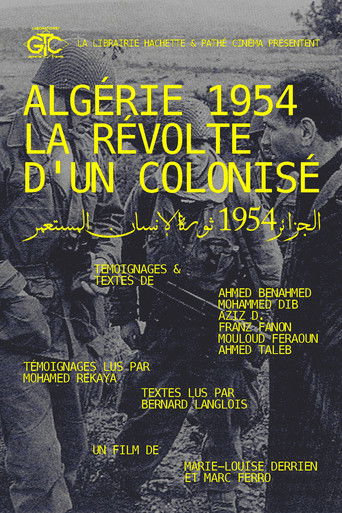
- Mouloud Feraoun is best known for Algeria 1954, The Revolt Of A Colonized.
- How many films and series has Mouloud Feraoun been in?
- Mouloud Feraoun has 1 film and 0 series credits on record.